Three-Star Status Solidifies Le Gabriel as a Power Player in Paris Dining Scene
Le Gabriel - Paris, France
RESTAURANTS
2 min read
Paris — In a city where Michelin stars are both currency and cultural marker, Le Gabriel has firmly entered the upper echelon of global fine dining. The restaurant, housed inside the discreetly opulent La Réserve Paris just off the Champs-Élysées, was awarded its third Michelin star in 2024; a milestone that reflects nearly a decade of steady ascent under executive chef Jérôme Banctel.
Owned by French entrepreneur Michel Reybier, La Réserve opened Le Gabriel in 2015 as part of a broader strategy to position the hotel among Paris’ most exclusive hospitality offerings. Banctel, a Brittany native, earned two Michelin stars within the restaurant’s first year (an unusually rapid rise) and has since refined a culinary identity rooted in technical precision and regional storytelling.
The third star places Le Gabriel among a small group of elite Parisian restaurants and signals Michelin’s recognition of Banctel’s distinct approach, which blends classical French technique with modern experimentation. Central to that approach is a signature alkaline cooking method that alters texture in unexpected ways: ingredients emerge tender within while maintaining structural integrity on the outside, a technique that has become something of a calling card.
Industry observers note that Banctel’s cooking reflects a broader trend in high-end French dining: a return to regional identity, executed with contemporary rigor. At Le Gabriel, that philosophy is most evident in the “Virée” tasting menu, which draws heavily from the seafood traditions of Brittany. Shellfish, mackerel, and cephalopods dominate the progression, presented in compositions that emphasize contrast; temperature, texture, and salinity, without sacrificing cohesion.
Banctel’s association with luxury brands has also elevated his international profile. As an ambassador chef for Krug, he participates in curated culinary events that pair his cuisine with the house’s prestige cuvées, reinforcing the restaurant’s alignment with the highest tiers of global gastronomy.
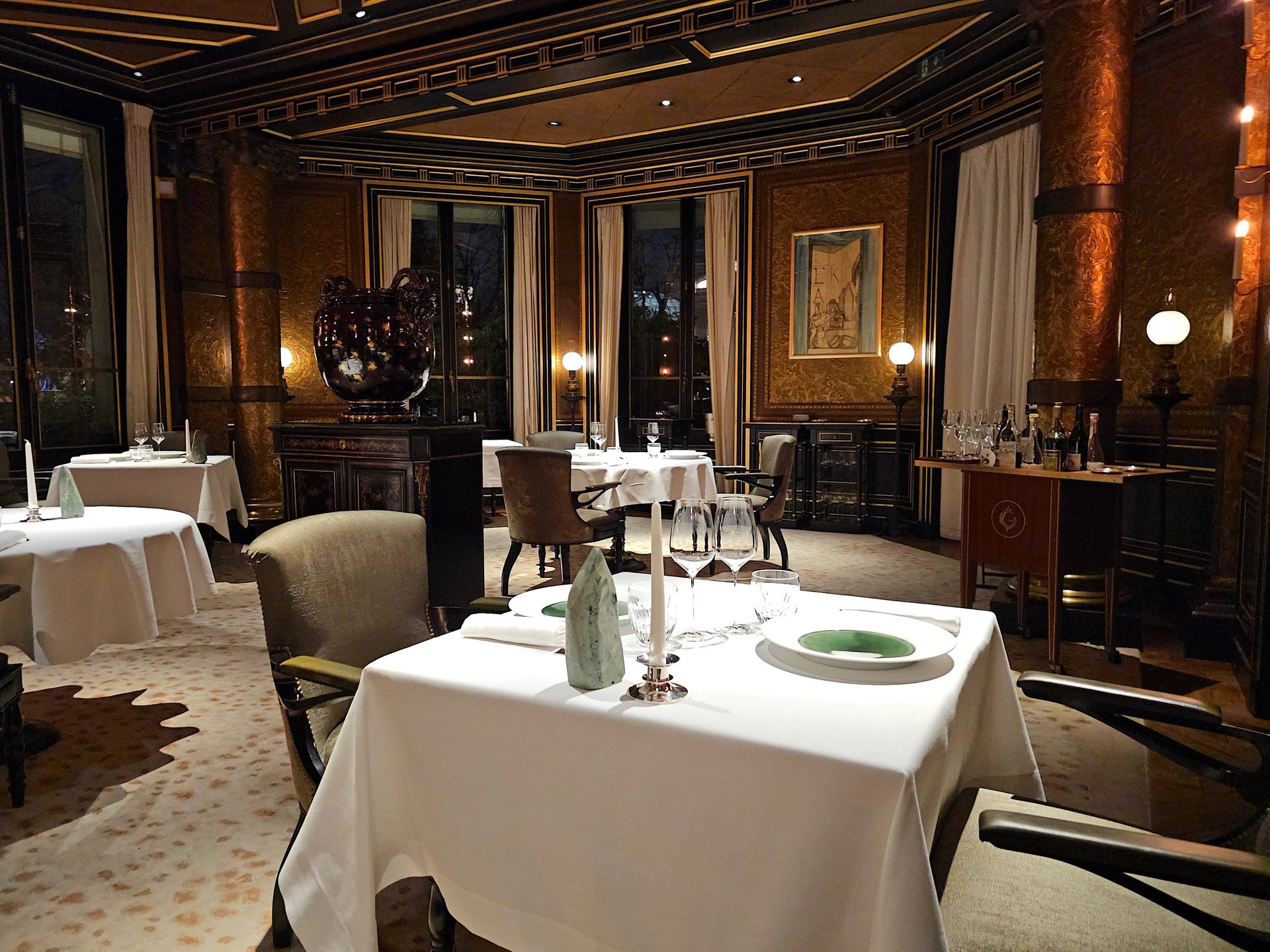
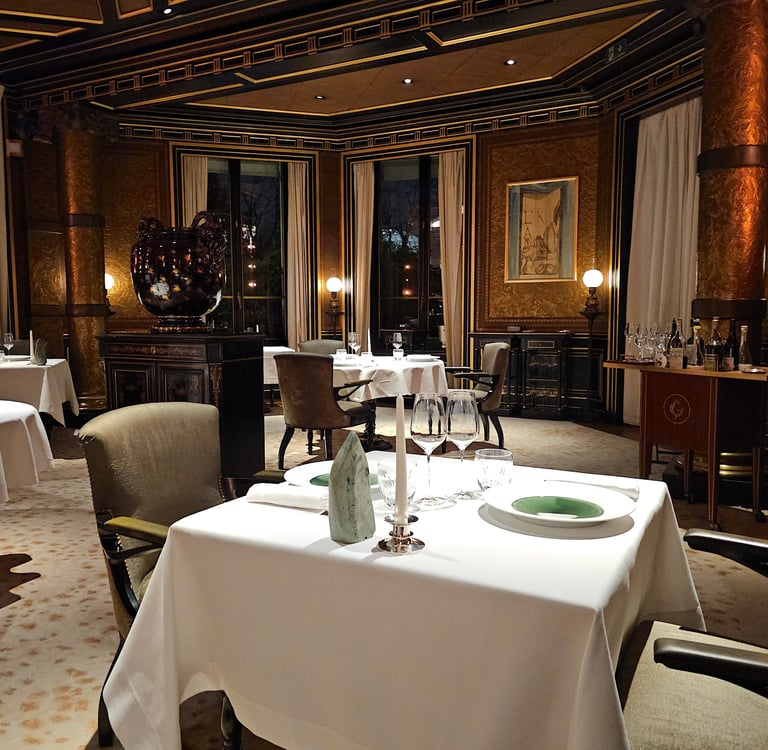
Despite its technical ambition, Le Gabriel’s appeal remains grounded in experience. The dining room set within a restored 19th-century mansion leans into understated elegance, with dark woods, gilded detailing, and a deliberately intimate layout. Service, in keeping with Michelin expectations, is polished but unobtrusive, catering to a clientele that increasingly includes international travelers seeking destination dining experiences.
The timing of Le Gabriel’s third star is notable. Paris’ fine dining sector has seen renewed global attention post-pandemic, with American travelers in particular returning in force and driving demand for high-end reservations. For a demographic accustomed to tasting menus in cities like New York, Los Angeles, and Copenhagen, Le Gabriel offers a distinctly French counterpoint less avant-garde than its Nordic peers, but no less sophisticated.
For Reybier and Banctel, the challenge now shifts from ascent to consistency. Maintaining three Michelin stars requires not only culinary excellence but also operational precision across every aspect of the guest experience. Early indicators suggest Le Gabriel is well-positioned: reservations remain competitive, international recognition is growing, and Banctel’s cuisine continues to evolve without losing its core identity.
In a crowded field of storied Parisian institutions, Le Gabriel’s rise underscores a simple reality: heritage alone no longer guarantees relevance. Execution, innovation, and a clear point of view do. On those fronts, Le Gabriel appears firmly in command.